
How to reduce the noise of transformer silicon steel sheet
1. Reduce vibration source noise
(1) Choosing high magnetic permeability materials with low magnetic elasticity, such as 30ZHl20 silicon steel sheets, can reduce noise by 4-5 dB (A) compared to using other raw materials for silicon steel sheets.
(2) Lowering the magnetic density of the iron core can reduce noise. For every 0.1T decrease in magnetic density, it can decrease by 2-3dB (A). After reducing the magnetic density due to noise, the cross-sectional area of the iron core, equivalent capacity of the transformer, and cost all increase accordingly, which is uneconomical in terms of cost. Therefore, the decrease in magnetic density cannot exceed 10% of the standard magnetic density.
(3) Improve and reduce the seam of the iron core. The iron core adopts multi-stage seams. Choosing a multi-stage joint iron core has lower no-load noise compared to a two-stage joint, which can reduce noise by 4-5 dB (A). This is because the use of multi-level (four level and above) seams results in a more uniform distribution of magnetic flux at the seams, which greatly reduces the magnetic density in the air gap and reduces the noise caused by magnetic attraction at the seams. Additionally, reducing the seam can decrease the amplitude, while also reducing the excitation capacity and current of the transformer, resulting in a significant decrease in sound power and a reduction of 4-5dB (A) in no-load noise.
(4) Avoid and reduce mechanical impacts on cold-rolled silicon steel sheets during processing and production, otherwise it will increase the magnetic elasticity of the silicon steel sheets and add noise from the iron core.
(5) Applying epoxy adhesive or polyester adhesive on the end face of the iron core can add tension binding to the surface of the iron core, and also reduce the magnetic elasticity and noise.
2. In terms of absorbing sound energy and reducing vibration
(1) Part of the noise generated by the iron core is transmitted through the bottom and foundation of the box. If a buffer is added between the body and the fuel tank or between the fuel tank and the base, it can attenuate the sound through the buffer. Anti vibration rubber pads can be placed at the foot of the iron core and between the magnetic shield and the box wall, so that when the oscillation of the iron core and magnetic shield is transmitted to the oil tank, it changes from a rigid connection to an elastic connection, and then achieves the intention of reducing oscillation, avoiding resonance, and reducing noise. It can reduce noise by 1-2dB (A).
(2) Strengthening the iron inside the fuel tank with sound insulation materials can absorb a portion of the energy generated by the tank oscillation, and then achieve the intention of reducing the body noise, which can reduce the noise by 2-3dB (A).
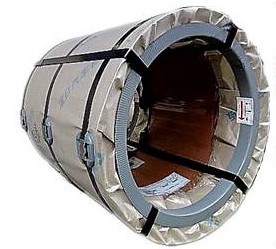
Add 3 sound insulation layers to reduce noise
According to the structure of the fuel tank, it is divided into two types: combination type and high-efficiency type. Combination type: Several soundproof panels can be made according to the external structural condition of the fuel tank, and sound-absorbing materials can be placed inside the steel plate. Acoustic materials include rock wool, fiberglass, etc. Soundproof walls can reflect back some of the noise emitted by the transformer body; And when the noise passes through the soundproof wall, it can also be absorbed to reduce the noise. Single piece soundproof panels are fixed to the fuel tank reinforcement iron with bolts. Choosing this type of soundproof panel can reduce noise by 10-15 dB. Alternatively, soundproof panels can be placed between two reinforcement irons and fixed with thin spring steel plates. The frame shaped additional weight is used to adjust the oscillation characteristics of the sound insulation board, making its amplitude significantly lower than that of the reinforced iron, and then shielding the noise announced by the transformer body, which can reduce the noise by 10-5dB (A).
4 Noise reduction method
Use noise reduction method to reduce noise. Place several noise generators within the transformer LM to cancel out the noise they announce and the noise announced by the transformer. Its principle is to first convert the noise signal of the transformer into an electrical signal, and then expand the excitation noise generator, so that the noise announced by each noise has the same amplitude and opposite phase, causing destructive disturbance to the transformer noise and reducing the noise by about 15dB (A).
5 Other Methods
(1) When designing low no-load noise transformers, it is recommended to choose self cooling type as much as possible, which can eliminate the superposition of noise from electric fans and oil pumps. When the capacity is insufficient to meet the demand, in order to satisfy the heat dissipation of large capacity transformers, low-noise submersible oil pumps and low-speed electric fan coolers should be selected as much as possible. Choosing a low-speed electric fan can increase the capacity of the self cooling transformer by 33% and achieve a noise level of 69dB (A). Depending on the specific situation, a dual speed electric fan can also be selected. When the load is low and the low-speed fan is turned on, the noise can be correspondingly reduced; When the load is high, turning on the high-speed fan can increase the capacity of the self cooling transformer by 67%, but at this time, the noise is high, reaching 75dB (A).
(2) When installing transformers indoors, consideration should be given to the potential increase in noise caused by the reflection of noise on the wall. The value-added is a function of the ratio of the surface area of the transformer to the surface area of the transformer room, and is related to the sound absorption coefficient of the walls and ceilings. Using slag wool or similar materials for wall coating treatment can add sound absorption coefficient to significantly reduce noise.
Article source: Transformer silicon steel sheethttp://www.cheungshun.com/
-
08-27
What is the function of the iron core of the silicon steel sheet in a transformer
The commonly used transformer iron core is generally made of silicon steel sheets. Silicon steel is a type of steel containing silicon, with a silicon content of. 0.8%~4.8%. The iron core of a transfo
-
08-27
The difference between hot-rolled and cold-rolled silicon steel sheets for transformers
In daily life, silicon steel sheets are widely used in motor cores. However, in terms of manufacturing silicon steel sheets, there are two aspects: hot rolling and cold rolling. Many friends do not kn
-
08-27
Is it better for silicon steel sheets to have a higher silicon content
The silicon steel sheet manufacturer's answer is not really satisfied with thinner silicon steel cores with higher silicon content. In terms of standards, the silicon content of thinner steel cores do
-
08-27
The difference between silicon steel sheet and silicon steel sheet
silicon steel sheetElectrical silicon steel sheets are commonly known as silicon steel sheets or silicon steel sheets. It is an electrical silicon steel with a silicon content of up to 0.8% -4.8%, mad
Copyright © 2026 Jiangmen Cheungshun Electric Products Factory Co., Ltd. All rights reserved xml site map