
The difference between transformer silicon steel sheet and silicon steel sheet
Silicon steel sheet and silicon steel sheet are two different names with different stages. Actually, it's the same thing.
Silicon, the old name for the chemical element "silicon". The word 'silicon', such as' Silicon Valley '(Silicon Valley). Electrical silicon steel sheets are commonly known as silicon steel sheets or silicon steel sheets. Generally speaking, silicon steel sheet belongs to the category of sheet metal, which is an independent branch due to its special use.
Electrical silicon steel sheet, commonly known as silicon steel sheet or silicon steel sheet:. It is a soft magnetic alloy of silicon iron with extremely low carbon content, generally with a silicon content of 0.5-4.5%, made by heating and cold rolling. Generally, the thickness is below 1mm, so it is called thin plate. Adding silicon can improve the electrical resistivity and magnetic permeability of iron, reduce coercivity, iron core loss (iron loss), and magnetic aging. Mainly used to manufacture iron cores for various transformers, motors, and generators. The global output value of silicon steel sheets accounts for about 1% of the total steel production (see precision alloys).
Generally speaking, silicon steel sheet belongs to the category of sheet metal, which is an independent branch due to its special use. It is a soft magnetic alloy of silicon iron with extremely low carbon content, generally with a silicon content of 0.5-4.5%. Adding silicon can improve the electrical resistivity and magnetic permeability of iron, reduce coercivity, iron core loss (iron loss), and magnetic aging.
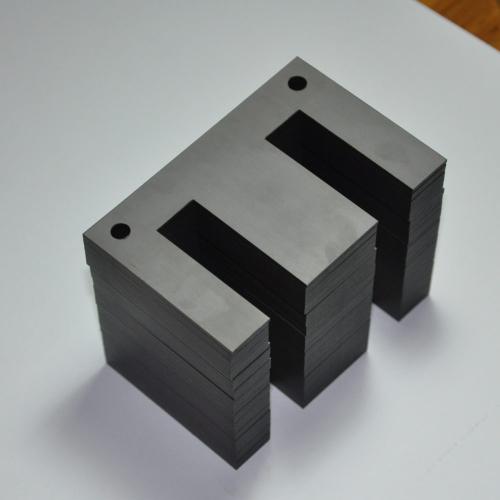
Silicon steel sheets are electrical steel, and the chemical composition of cold-rolled silicon steel sheets is approximately 0.8% to 4.8% silicon and 0. 0.6% carbon, 0.15% manganese, 0.03% phosphorus, 0.025% sulfur, and 5.1-8.5% aluminum, with the remainder being iron. The effects of these elements in silicon steel sheets are:
(1) Carbon (C) will increase the hysteresis loss of steel plates. 0.06%
(2) Silicon (Si) can reduce the adverse effects of carbon, that is, reduce hysteresis loss, and improve magnetic permeability and resistivity. The aging effect of magnetic deterioration caused by long-term use is 0.8% to 4.8%. Silicon steel sheets below 2.8% are commonly used in micro motors, and those above 2.8% are commonly used in transformer cores
(3) Sulfur (S) can cause thermal brittleness in silicon steel sheets, increase hysteresis loss, and decrease magnetic induction intensity by 0.025%
(4) Manganese (Mn) can promote phase transformation in steel, which is detrimental to decarburization and desulfurization, resulting in a decrease in magnetic induction. 0.15%
The impurity elements present in steel are non-magnetic or weakly magnetic substances, and their presence causes lattice distortion, misalignment, vacancies, and internal stress, making magnetization difficult.
Si: Silicon steel sheets with a content below 2.8% are commonly used in micro motors, while those with a content above 2.8% are commonly used in transformer cores. Originally, there were two types: cold-rolled and hot-rolled. At present, the country is forcing the implementation of cold-rolled silicon steel sheets. There are many types of cold-rolled steel plates, such as low-carbon steel, silicon steel sheets, stainless steel, etc.
Article source: Transformer silicon steel sheethttp://www.cheungshun.com/
-
08-27
What is the function of the iron core of the silicon steel sheet in a transformer
The commonly used transformer iron core is generally made of silicon steel sheets. Silicon steel is a type of steel containing silicon, with a silicon content of. 0.8%~4.8%. The iron core of a transfo
-
08-27
The difference between hot-rolled and cold-rolled silicon steel sheets for transformers
In daily life, silicon steel sheets are widely used in motor cores. However, in terms of manufacturing silicon steel sheets, there are two aspects: hot rolling and cold rolling. Many friends do not kn
-
08-27
Is it better for silicon steel sheets to have a higher silicon content
The silicon steel sheet manufacturer's answer is not really satisfied with thinner silicon steel cores with higher silicon content. In terms of standards, the silicon content of thinner steel cores do
-
08-27
The difference between silicon steel sheet and silicon steel sheet
silicon steel sheetElectrical silicon steel sheets are commonly known as silicon steel sheets or silicon steel sheets. It is an electrical silicon steel with a silicon content of up to 0.8% -4.8%, mad
Copyright © 2026 Jiangmen Cheungshun Electric Products Factory Co., Ltd. All rights reserved xml site map