
How to demagnetize transformer silicon steel sheets
Why demagnetize and how to demagnetize
Demagnetization is essential
The demagnetization of the sample refers to the situation where both the magnetic intensity H and the magnetic induction intensity B are zero. Sometimes, this situation is also referred to as magnetic neutrality, and the process of demagnetizing the sample is called magnetic neutralization. Due to the fact that measuring hysteresis loop is a process in which the magnetic properties of the sample change with the external magnetic field, if there is magnetism at the beginning of the sample, the hysteresis loop will not start from zero, resulting in irregular hysteresis loop.
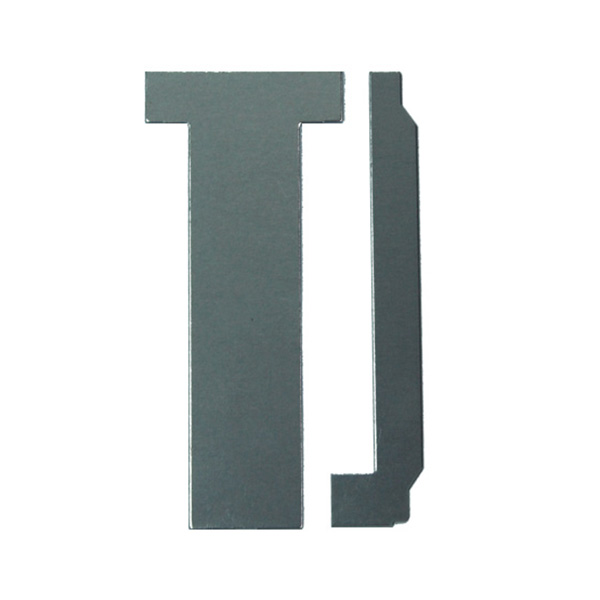
Two demagnetization methods
1. Thermal demagnetization is the process of heating a sample above its Curie point and then slowly cooling it to room temperature in the absence of an external field. Although the operation process of this method is complex and may cause structural changes to the sample, it can achieve demagnetization.
The Curie point, also known as the Curie temperature or magnetic modification point, refers to the temperature at which a material can be modified between a ferromagnetic and paramagnetic material, i.e. the phase transition temperature at which a ferromagnetic material changes from the ferromagnetic phase to the paramagnetic phase.
2. Communication demagnetization is the process of applying a low-frequency alternating magnetic field to a sample and uniformly reducing its amplitude from a larger value to zero. AC demagnetization is divided into DC commutation demagnetization and AC demagnetization at power frequency.
The AC demagnetization method under power frequency is widely used now. Due to different detailed operation processes, there may be differences in the speed of changes in the magnetic field or sample magnetic induction. The experiment shows that the uniform descent magnetic induction method is a good demagnetization method
Article source: Transformer silicon steel sheethttp://www.cheungshun.com/
-
08-27
What is the function of the iron core of the silicon steel sheet in a transformer
The commonly used transformer iron core is generally made of silicon steel sheets. Silicon steel is a type of steel containing silicon, with a silicon content of. 0.8%~4.8%. The iron core of a transfo
-
08-27
The difference between hot-rolled and cold-rolled silicon steel sheets for transformers
In daily life, silicon steel sheets are widely used in motor cores. However, in terms of manufacturing silicon steel sheets, there are two aspects: hot rolling and cold rolling. Many friends do not kn
-
08-27
Is it better for silicon steel sheets to have a higher silicon content
The silicon steel sheet manufacturer's answer is not really satisfied with thinner silicon steel cores with higher silicon content. In terms of standards, the silicon content of thinner steel cores do
-
08-27
The difference between silicon steel sheet and silicon steel sheet
silicon steel sheetElectrical silicon steel sheets are commonly known as silicon steel sheets or silicon steel sheets. It is an electrical silicon steel with a silicon content of up to 0.8% -4.8%, mad
Copyright © 2026 Jiangmen Cheungshun Electric Products Factory Co., Ltd. All rights reserved xml site map